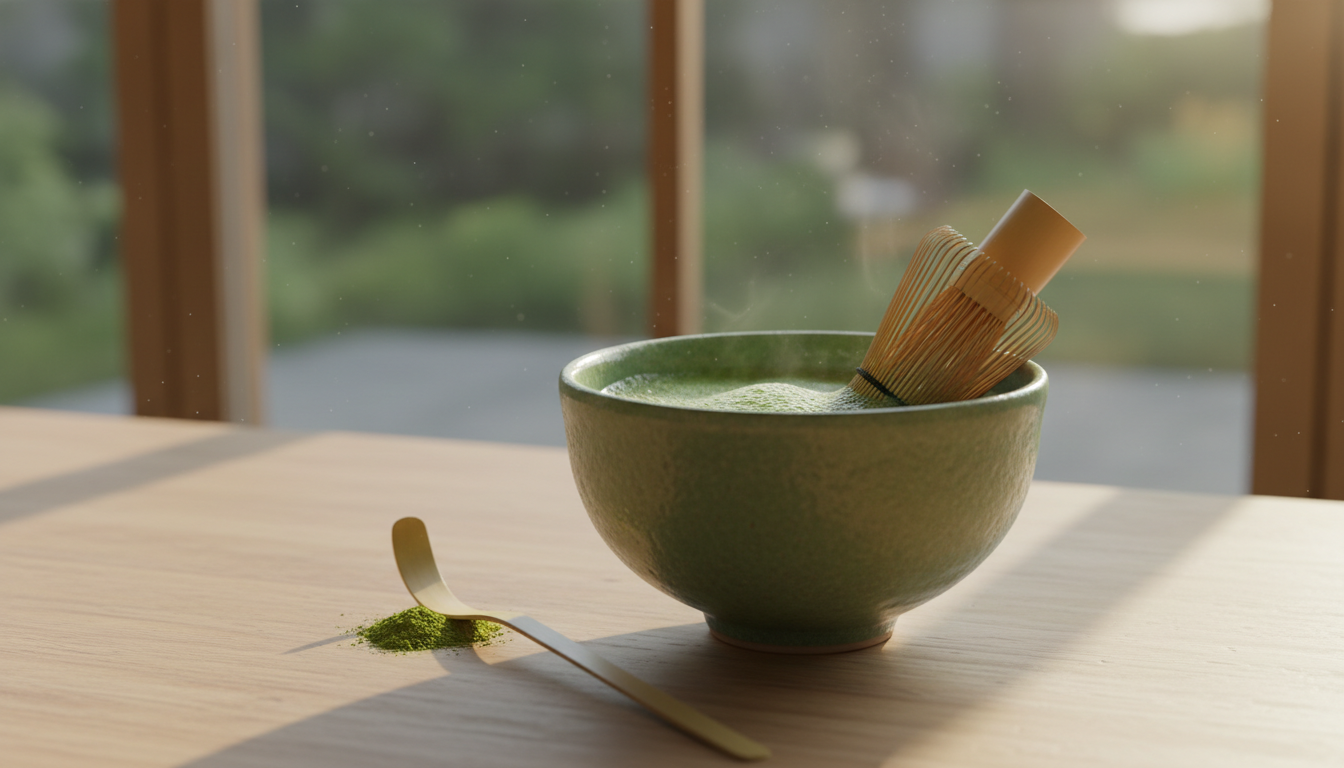
Matcha for weight loss is a popular idea, but the honest answer is that matcha may nudge fat burning a little and will not melt weight off by itself. Studies on green tea show small or no change on the scale, and the one small matcha trial found a tiny rise in fat burning during a walk. Matcha works best as a low-calorie swap for sweet drinks, with a sensible caffeine limit. This guide shows the evidence, a worked example, how to use it, and who should skip it.
What is matcha, and why is it linked to weight loss?
Matcha is green tea leaf ground into a fine powder. You whisk the powder into water and drink the whole leaf, instead of throwing the leaves away after steeping. That is why a cup of matcha carries more caffeine and more catechins than a bag of regular green tea. Catechins are plant compounds found in tea. The main one is EGCG.
Caffeine and EGCG are the reason matcha for weight loss gets so much attention. Both are thought to raise energy use slightly. Healthline reports caffeine at about 19 to 44 mg per gram of matcha, compared with 11 to 25 mg per gram of green tea leaf. A typical serving is 1 to 2 grams, so one cup holds roughly 20 to 90 mg of caffeine. For comparison, the NHS puts a cup of black or green tea at about 75 mg. If you want to see how a regular cup compares, read our guide to black tea.
Does matcha for weight loss actually work? What studies show
There is very little research on matcha itself. Most of what you read online borrows results from green tea or green tea extract. Here is what the stronger sources say.
| Source | What was tested | Main result |
|---|---|---|
| Cochrane review (2012) | Green tea preparations in overweight adults, 12 to 13 weeks | Outside Japan, six studies with 532 people showed an average difference of 0.04 kg. Japanese studies ranged from 0.2 kg to 3.5 kg lost. |
| Meta-analysis, Hursel and colleagues (2009) | 11 studies of catechins, with or without caffeine | About 1.3 kg more weight loss than control. The effect looked smaller in people who already had over 300 mg of caffeine a day, but that gap was not statistically significant. |
| Willems and colleagues (2018) | 13 women, matcha drinks, 30 minute brisk walk | Fat burned rose from 0.31 to 0.35 grams per minute. The authors warn the effect should not be overstated. |
| Mouse study (PMC9376390) | Mice on a high-fat diet, matcha at 1% of the diet, 8 weeks | Less weight gain with no change in food eaten. No human data. |
The Cochrane review of green tea for weight loss by Jurgens and colleagues is the most careful summary. Its authors concluded that green tea gives a small, statistically non-significant weight loss that is unlikely to matter clinically. It also found no clear help for keeping weight off. The NCCIH, part of the US National Institutes of Health, uses similar wording: tea catechins and caffeine may have a modest effect on body weight.
Why do some studies show more? The Japanese trials gave bigger results, and the 2009 meta-analysis suggests habits may play a role. People who drink little caffeine may respond more than heavy tea and coffee drinkers. That is a hint, not a proven rule.
A worked example: what 0.04 grams of fat per minute really means
The Willems trial is the best matcha-specific human result, so it is worth doing the maths. Fat burned during the walk went from 0.31 to 0.35 grams per minute. That is 0.04 grams more each minute. Over a 30 minute walk, the gain is about 1.2 grams of fat.
Fat holds roughly 9 calories per gram, so 1.2 grams is about 11 calories. That is less than the energy in one teaspoon of sugar. The study was small, short and tested one group of young women, so it cannot tell us what happens over months. It supports the idea that matcha for weight loss is a small helper, not a driver.
What the mouse study does and does not tell you
You may see headlines saying matcha fights obesity through the gut and liver. The paper behind them used male mice, five per group, for eight weeks. Matcha cut weight gain on a high-fat diet, and the mice ate the same amount. That is interesting biology. But mice are not people, the dose was fixed at 1% of their food, and the authors say the gut bacteria links still need to be verified. Treat it as a reason to run human trials, not as proof.
How to use matcha for weight loss without fooling yourself
If you enjoy matcha, here is a simple way to make it work for you instead of against you.
- Use 1 to 2 grams of powder, about half to one level teaspoon, in 60 to 80 ml of water. Healthline notes that around 4 grams a day is where catechin intake nears the 338 mg level it describes as safe for adults.
- Drink it plain or with a splash of unsweetened milk. Plain matcha is mostly water with a little leaf powder, so the calories come from what you add. Two teaspoons of sugar alone add about 32 calories.
- Replace something, do not add it. Swap a sweet latte, soft drink or second sugary chai. A swap saves calories. An extra drink does not.
- Time it for comfort. A cup before a walk fits the Willems study, but drinking it on an empty stomach upsets some people. Have a small snack if you feel queasy.
- Stop caffeine by mid afternoon if it affects your sleep. Poor sleep may make weight control harder, which can cancel any small gain.
For how to prepare it properly, see our notes on how to whisk matcha in a bowl. If you want a wider view of the powdered form, our piece on green tea powder covers the basics.
Common mistakes that stall results
- Buying a matcha latte mix that is mostly sugar and milk powder. Check the label for added sugar.
- Expecting the scale to move without changes to food and movement. Even in the studies above, the effects were small.
- Taking green tea extract capsules to get a stronger dose. This is where the real safety problems appear, as the next section explains.
- Counting on a weight-loss tea blend. Some slimming teas contain laxative herbs, which cause water loss, not fat loss. Read the ingredient list.
Is matcha for weight loss safe? Liver, lead and caffeine
Drinking matcha as a beverage is generally low risk for most healthy adults. The concern is concentrated doses. In its scientific opinion on green tea catechins from 2018, the European Food Safety Authority found that 800 mg or more of EGCG a day from supplements raised liver enzymes in trials. It could not identify a safe dose for green tea extracts. It treated traditional tea infusions as generally safe, while noting rare liver injury cases. Matcha sits in between, because you swallow the whole leaf, so do not assume the infusion figures apply. Keep to a cup or two, and avoid adding extract capsules.
Lead and other metals are another point. Tea plants take up metals from soil, and with matcha you drink the leaf itself. Much of the testing data published online comes from sellers, so it is weak evidence. Choose brands that publish third-party lab reports, and favour products with a clear origin.
Who should avoid or limit matcha
- Pregnant people. The NHS says to have no more than 200 mg of caffeine a day. Matcha adds up quickly, so read our guide to matcha during pregnancy and ask your doctor.
- Anyone with liver disease, or who has had liver problems linked to green tea.
- People on medicines. The NCCIH notes green tea extract can lower blood levels of atorvastatin and the beta-blocker nadolol. Ask a pharmacist first.
- People with anxiety, insomnia, palpitations or high blood pressure, who may react to caffeine.
- People with low iron. Tannins in tea can reduce iron absorption, so keep matcha away from meals.
Matcha for weight loss: common questions
How much matcha should I drink a day?
One or two cups with 1 to 2 grams of powder each is a sensible range. More caffeine does not mean more fat loss, and the studies do not support higher amounts.
Is matcha better than green tea for weight loss?
There is no trial that proves this. Matcha has more catechins and caffeine per serving, but the best evidence comes from green tea, and its effect there is small.
Can matcha burn belly fat?
No research shows tea removes fat from one body area. Weight loss from the belly follows overall weight loss, which depends mostly on food, sleep and activity.
The bottom line: enjoy matcha for weight loss as a low-calorie, caffeine-containing drink that replaces sugary ones. Do not pay premium prices expecting results, and talk to a doctor before using any green tea supplement.


Leave a Reply