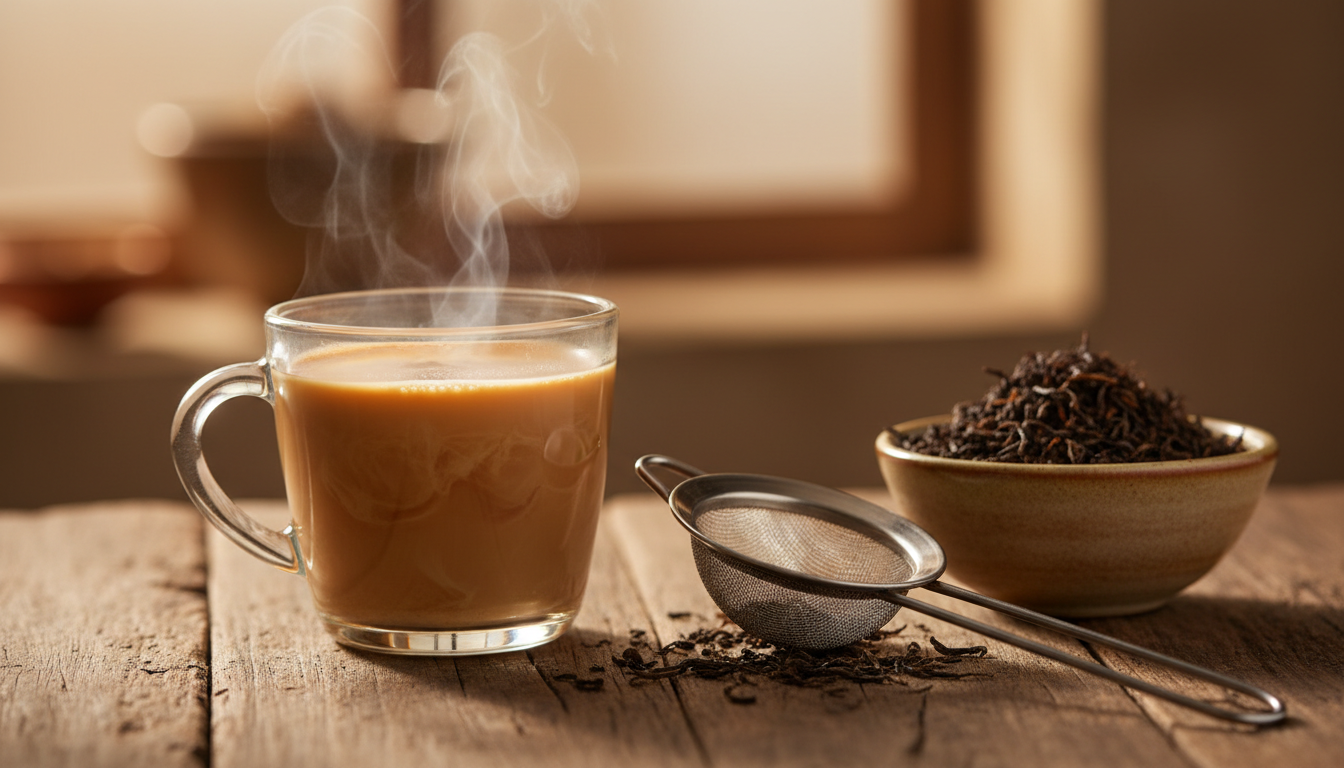
Tea side effects are real, but they mostly come from dose and timing, not from tea itself. For most healthy adults, a few cups a day cause no harm. Trouble usually comes from three things: caffeine (poor sleep, jitters), tannins (less iron absorbed from your food) and drinking tea very hot or on an empty stomach. India’s ICMR-NIN 2024 guidelines set a caffeine limit of 300 mg a day and advise keeping tea away from meals. This guide shows which symptom comes from which cause, gives a caffeine budget for chai drinkers, and lists who should be extra careful.
What are the side effects of tea?
Most tea side effects trace to what the leaf contains. Tea is made from the leaves of the Camellia sinensis plant (black, green, white and oolong tea). It contains caffeine, a stimulant, and tannins, plant compounds that give tea its dry, bitter feel. Almost every well-documented effect traces back to one of these two, or to the heat of the cup.
Here is the short list, with how strong the evidence is:
| Side effect | Main cause | Evidence and who is most affected |
|---|---|---|
| Poor sleep, jitters, fast heartbeat | Caffeine | Well established. Worse with high intake, late drinking or caffeine sensitivity |
| Lower iron absorption from meals | Tannins | Well established in meal studies. Matters most if you have low iron |
| Acidity, nausea, heartburn | Caffeine, tannins, empty stomach | Common but varies by person. Evidence is mixed |
| Oesophageal cancer risk | Very hot drinks (above 65 °C) | WHO’s IARC says “probably” linked, based on limited evidence |
| Stained teeth | Tannins | Cosmetic only |
| Kidney stone risk | Oxalate | Low risk for most people. Past stone formers should ask a doctor |
Tea side effects from caffeine: sleep, anxiety and a racing heart
Caffeine is the best-known cause of tea side effects, so start there. The ICMR-NIN guidelines say a cup of tea holds about 30 to 65 mg of caffeine. WebMD (medically reviewed December 2024) gives about 47 mg for an 8-ounce cup of black tea and 28 mg for green tea, against 96 mg for black coffee. So tea is gentler than coffee, but it adds up.
Healthline’s October 2026 update notes that research links caffeine and anxiety more strongly above 400 mg a day, though sensitive people can react to less. Sleep is the earlier warning sign. A 2024 trial summarised by Healthline found that 100 mg within four hours of bedtime had little effect on sleep, while 400 mg within 12 hours of bed may harm it.
Signs you may be overdoing it: a pounding heart, shaky hands, headaches, restless nights or feeling wired and tired at once. Stopping suddenly can cause headache and irritability for a few days, because the body gets used to regular caffeine.
Does tea reduce iron absorption?
Yes, if you drink it with meals, and this is the side effect Indian readers should take most seriously. Tannins bind to non-heme iron, the kind found in dal, spinach, rajma and other plant foods, so less of it passes into your blood.
A classic 1982 study by Hallberg and Rossander, indexed on Europe PMC, tested common drinks with meals. Serving tea cut iron absorption from the meal by about 62 percent, and coffee by about 35 percent. That is a lab meal study, not a measure of real-life anaemia, but it explains the advice.
Advice differs slightly. The ICMR-NIN guidelines say to avoid tea and coffee at least an hour before and after meals. A Vinmec hospital article suggests a gap of 20 to 30 minutes. If you are anaemic or vegetarian, the longer gap is the safer choice.
Why does tea cause acidity and nausea?
Many people feel burning, bloating or queasiness after a strong cup on an empty stomach. Caffeine can raise stomach acid, and tannins can irritate the stomach lining. Healthline lists nausea and heartburn among the common tea side effects, but also says reactions vary a lot. A Mendelian randomisation study it cites found a possible link between tea and reflux, which is a genetic method and not proof.
Some Indian nutritionists suggest waiting 60 to 90 minutes after waking before the first cup, and eating something small first. Treat this as a practical habit that helps many people, not a rule proven by trials. If you get heartburn often, a doctor should check it.
Herbal teas are different. A cup of ginger tea or fennel tea has no caffeine from the tea plant, and many people find them gentler. They have their own cautions, so read those posts before making them a daily habit.
Is very hot tea a cancer risk?
This claim needs care. In 2016, the World Health Organization’s cancer agency, IARC, classed drinking very hot beverages as “probably carcinogenic to humans” (Group 2A). “Very hot” means above 65 °C. The evidence was limited, and the agency said it is the temperature, not the drink, that appears to matter.
A recent analysis of about one million UK adults, published in the International Journal of Cancer, found that very hot drinks were linked with a higher risk of one type of oesophageal cancer (squamous cell). Observational studies cannot prove cause, but the advice is cheap to follow: let your tea cool for a few minutes before sipping.
Other tea side effects: stained teeth, kidney stones and dependence
Teeth: among the milder tea side effects, tannins can leave a yellow or brown stain over time. It is cosmetic, and rinsing with water after tea helps.
Kidney stones: black and green tea contain oxalate. A 2021 study of black tea measured about 57.5 mg of oxalate per litre. Harvard Health says moderate tea is not a problem for most people, because the extra fluid helps. If you have had calcium oxalate stones, ask your doctor how much tea suits you.
Dependence: caffeine is habit forming. Healthline cites research suggesting that withdrawal symptoms can begin after as few as three days of regular intake.
How many cups of tea are too many? A chai caffeine budget
The ICMR-NIN limit is 300 mg of caffeine a day from all sources. Using its range of 30 to 65 mg per cup, here is what that means in cups of tea alone:
| Cups of tea per day | Caffeine range (mg) | Against the 300 mg limit |
|---|---|---|
| 2 | 60 to 130 | Well under |
| 4 | 120 to 260 | Under, even at the high end |
| 5 | 150 to 325 | Can pass the limit at the high end |
| 6 | 180 to 390 | Likely to pass it if cups are strong |
Two cautions. First, the limit covers coffee, cola and energy drinks too, so a morning coffee uses part of your budget. Second, cup size and strength change the numbers. A small glass of light tea sits near 30 mg, while a large mug of long-boiled chai may be higher. The sources I reviewed gave no measured values for roadside chai, so treat the table as a guide, not a measurement.
Pregnant women are advised to stay lower. The American College of Obstetricians and Gynecologists recommends under 200 mg a day, as reported by Healthline. Counting two to four small cups of tea against that figure leaves little room for other sources.
Which tea side effects point to which cause?
Many people blame tea for every symptom. This quick guide matches common tea side effects to the most likely cause and a fix to try for a week:
| What you notice | Likely cause | Try this |
|---|---|---|
| Wide awake at night | Caffeine late in the day | Stop caffeinated tea 8 to 12 hours before bed |
| Shaky or anxious after 2 to 3 cups | Caffeine sensitivity | Halve the strength or switch to herbal tea |
| Tired, hair fall, low ferritin | Tea with meals plus low iron | Move tea to one hour away from meals; get iron checked |
| Burning or queasy on waking | Strong tea on an empty stomach | Eat first; delay tea; make it lighter |
| Burning only with steaming tea | Heat | Let it cool for a few minutes |
| Constipation or bloating with strong tea | Tannins | Use less leaf, steep shorter |
This table is a self-help guide, not a diagnosis. Symptoms that persist deserve a doctor’s visit.
Who should be careful about tea side effects?
- Pregnant or breastfeeding women: keep caffeine within medical advice.
- People with iron deficiency or anaemia, and vegetarians who rely on plant iron.
- People with reflux, gastritis or ulcers: strong tea may worsen symptoms, so ask your doctor.
- Anyone with heart rhythm problems, anxiety or insomnia: caffeine can make these worse.
- People with a history of calcium oxalate kidney stones.
- Children and teenagers: caffeine limits are lower for them, so check with a paediatrician.
- People on medicines: caffeine and some herbal teas can interact, so ask a pharmacist.
Simple ways to lower tea side effects
- Keep tea one hour away from meals, especially if iron is low. This single habit prevents the most common tea side effects on nutrition.
- Count your total caffeine, not just tea. Stay under 300 mg a day.
- Stop caffeinated tea by mid-afternoon if sleep is poor.
- Use less leaf and steep for a shorter time if you get acidity or bloating.
- Let the cup cool before you drink.
- Try caffeine-free options such as peppermint tea in the evening.
If you want to know how black tea compares for benefits and risks, see our guide to black tea benefits. Caffeine-free does not mean risk-free either: hibiscus tea can lower blood pressure, which matters for some people.
Frequently asked questions about tea side effects
Is it bad to drink tea every day?
For most healthy adults, no. Moderate daily tea within the 300 mg caffeine limit is generally considered safe. Tea side effects grow with high intake, poor timing and existing conditions.
Does milk make tea side effects better or worse?
The evidence is unclear. Tannins still bind iron when milk is added. One gastroenterologist quoted in the Indian Express said milk may further inhibit absorption of some nutrients, but this was an expert opinion, not trial data.
Do herbal teas have side effects?
Yes, but different ones. They avoid tea-plant caffeine and tannin, yet some herbs interact with medicines or are not advised in pregnancy. Check each herb before daily use.
When should I see a doctor?
See a doctor if you have chest pain, a very fast or irregular heartbeat, black stools, repeated vomiting, or symptoms that do not improve when you cut back.
The bottom line on tea side effects
Tea side effects are mostly avoidable. Keep caffeine under 300 mg a day, drink tea an hour away from meals, let it cool, and be extra careful if you are pregnant, anaemic or have reflux. This article was researched on 27 October 2026 using ICMR-NIN’s Dietary Guidelines for Indians 2024, WHO’s IARC, Healthline, WebMD and published studies. It is general information, not medical advice.



Leave a Reply