Tea, with its myriad forms and flavors, is not just a drink but a piece of cultural heritage shared by many civilizations across the globe. Each region has its own tale of how tea was discovered and integrated into daily life. Among these, the Indian legend regarding the discovery of tea is a fascinating narrative that blends mythology, spirituality, and the ancient history of this beloved beverage. Let us now figure out what is the indian legend regarding the discovery of tea
The Tale of Prince Bodhidharma

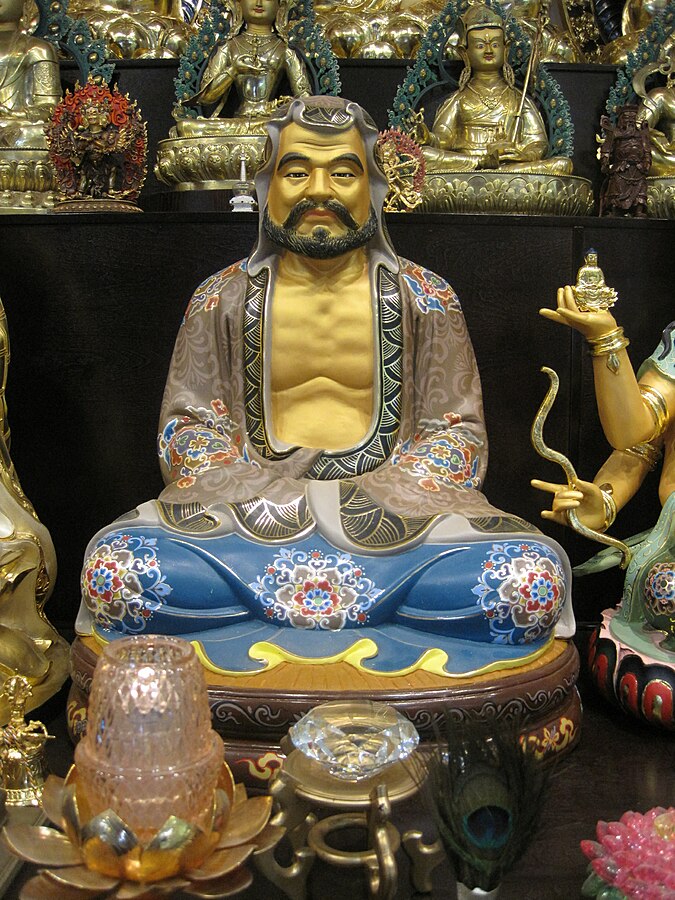
The Indian legend of tea begins with a prince named Bodhidharma, an Indian monk who lived during the 5th or 6th century AD. Bodhidharma was a Pallava king’s son from the southern part of India, who became a Buddhist monk and traveled to China to spread Buddhist teachings. According to the legend, it was during his meditations that tea was first discovered.
Bodhidharma’s journey led him to the Shaolin temple in the Chinese province of Henan, where he began a lengthy meditation, reportedly vowing to meditate in front of a wall for nine years without sleeping. The legend states that during these years, Bodhidharma grew tired and started to fall asleep. Frustrated with himself and determined to stay awake, he cut off his eyelids and threw them to the ground.
Miraculously, where his eyelids fell, the first tea plants sprang up. The leaves of these plants, when boiled in water, produced a liquid that banished sleep, thereby enabling the drinker to stay awake and meditate longer. Thus, tea became a tool for Buddhist monks to maintain alertness during their lengthy meditative practices.
Cultural Significance and Spread
The legend embodies the virtues of perseverance and sacrifice that are central to Buddhist philosophy. It symbolizes Bodhidharma’s dedication to spiritual practice and his inventive way of overcoming physical limitations. The discovery of tea is thus not just about the drink itself, but also about the spiritual awakening and discipline that it facilitated among monks.
From these mystical origins in the legend, tea spread across China and other parts of Asia. It became a staple in monasteries where monks used it to ward off sleep during meditation sessions. Over centuries, tea cultivation became more sophisticated, and it began to be classified into various types based on the method of processing the leaves.
The Introduction of Tea to India
While the legend situates the discovery of tea in the context of Bodhidharma’s travels to China, India has its own rich tradition of tea consumption. It is believed that tea plants were native to India as well, particularly in the northeastern regions, where local tribes had been brewing tea-like drinks for centuries before it became popularized by the British in the colonial period.
In the 19th century, the British East India Company began to cultivate tea on a large scale in Assam and Darjeeling after discovering that these areas had ideal climate conditions for tea growing. This marked the beginning of tea as a major commercial enterprise in India.
The Influence of Trade Routes and the Silk Road
As tea’s popularity grew, it didn’t remain confined to monasteries and temple rituals. The expansion of ancient trade routes—most notably, the network known as the Silk Road—was pivotal in carrying both the beverage and its traditions far beyond their origins. Caravans journeying across vast deserts and treacherous mountains served as pipelines not just for silk and spices, but also for the precious leaves and knowledge of tea.
The Silk Road served as a vibrant artery of exchange, through which merchants from China introduced tea to neighboring regions. Along the way, it was embraced by new cultures—in Japan, for example, tea took root and blossomed into the revered tea ceremony (chanoyu), emphasizing harmony and contemplation. Meanwhile, in Korea, Southeast Asia, and beyond, tea was woven into daily life and local customs.
Thus, these routes were not merely pathways for goods but also for ideas and rituals: tea, originally cultivated for its meditative benefits, became a symbol of hospitality, spirituality, and connection from Mongolia’s yurts to the gardens of Kyoto. This journey marked tea’s transformation from a monastic elixir into a worldwide phenomenon, shaping traditions wherever it traveled.
The Zen Roots of the Japanese Tea Ceremony
While the story of Bodhidharma highlights the origin of tea as a spiritual aid, the Japanese tea ceremony—known as chanoyu or chado—elevates these roots into an art form that deeply reflects Zen Buddhist principles. Introduced to Japan by Buddhist monks as early as the 9th century, tea soon transcended its humble beginnings and became woven into the very fabric of Japanese society, thanks to its adoption by the Zen tradition.
At the heart of the tea ceremony is more than the simple enjoyment of matcha (the finely powdered green tea that graces the ritual); it is about embodying and practicing four key principles: harmony (wa), respect (kei), purity (sei), and tranquility (jaku). Each movement, from the careful cleansing of utensils to the graceful serving of tea, is performed with mindful attention and intention. This careful choreography is designed not just for aesthetics, but as a means to anchor participants in the present moment, fostering a serene and meditative environment.
The ceremony itself encourages participants to step away from the bustle of daily life and become attuned to the fleeting beauty of each encounter—a core tenet of Zen’s understanding of impermanence. For both host and guest, preparing and sharing tea becomes a mindful ritual, nurturing awareness, gratitude, and an appreciation for the interconnectedness of all things. In this way, the Japanese tea ceremony is much more than a social custom; it is a living expression of Zen philosophy, drawing practitioners into a deeper sense of presence, humility, and compassion—qualities as vital to spiritual growth as they are to the enjoyment of a perfect cup of tea.
Growth of Tea Cultivation in China
Tea’s journey truly took root in China, where it began to flourish as both an agricultural pursuit and a cornerstone of daily life. Over centuries, tea farming adapted to the diverse landscapes—thriving in regions as varied as Yunnan’s lush green hills, the misty mountain slopes of Fujian, and Zhejiang’s fertile plains.
Each area fostered unique tea varieties and traditions:
- Yunnan is celebrated as the birthplace of wild tea trees and pu-erh, famed for its earthy, aged character.
- Fujian gave rise to delicate white teas and famously floral oolongs, shaped by the region’s fog-weathered highlands.
- Zhejiang earned distinction for its vibrant green teas, such as the renowned Dragon Well (Longjing).
As methods of processing evolved, so too did the flavors and rituals associated with tea. From the imperial courts to rural villages, distinct brewing techniques and ceremonies developed—manifested in everything from elegant gongfu tea tables in eastern China to robust infusions favored by nomads along ancient trade routes.
These rich traditions laid the groundwork for the vast array of flavors and cultural practices that would later travel across continents, cementing tea’s place as a symbol of hospitality, meditation, and everyday enjoyment in Chinese society.
Tea Today
Today, India is one of the world’s largest tea producers, and Indian teas like Darjeeling, Assam, and Nilgiri are renowned globally for their unique flavors and high quality. Tea has become deeply embedded in the social fabric of India, with almost every household starting their day with a cup of tea. The drink is not only a refreshment but also a part of many social rituals and gatherings.
FAQ’s regarding the Discovery of Tea
1. What was the Indian legend about the discovery of tea?
According to Indian folklore, tea was discovered when Buddhist monk Bodhidharma accidentally chewed on wild tea leaves to stay awake during meditation. The leaves gave him energy and focus, and that’s how tea’s powers were realized. This tale blends spirituality with nature—a beautiful origin rooted in discipline and self-discovery.
2. What are two famous legends about tea?
The first legend comes from China—Emperor Shen Nong accidentally discovered tea when tea leaves blew into his boiling water. The second is Indian: Bodhidharma, meditating for years, chewed tea leaves to fight drowsiness. Both stories highlight tea’s natural magic and its link to mindfulness and alertness.
3. What legend did Rajveer tell about the discovery of tea?
In many school textbooks, Rajveer shares the Bodhidharma tale. He talks about how the monk was meditating for years and cut off his eyelids to avoid sleep—where they fell, tea plants grew! It’s a vivid story that captures the ancient reverence for tea’s energizing effects.
4. Who first invented tea in India?
Tea wasn’t really “invented” in India—it was discovered. Indigenous tribes in Assam had been brewing tea-like drinks from wild leaves for centuries. But it was the British who commercialized it in the 1800s. So, while the locals knew tea well, the global spotlight came much later.
5. Where does tea come from originally?
Tea originally comes from China, where it’s been part of life for over 4,000 years. It started as a medicinal drink and evolved into a daily ritual. From China, it journeyed across Asia and eventually reached the West, finding a second home in countries like India.
6. Is tea originally Chinese or Indian?
Tea is originally Chinese. Ancient texts show that China was drinking and cultivating tea thousands of years ago. India had wild tea growing naturally, especially in Assam, but it was the British who tapped into it commercially. So, while India became a tea giant, China had the first cup.
7. Did India get tea from Britain?
Not exactly. Wild tea plants were already growing in India, especially in Assam. But it was the British who turned tea into a massive industry in India during colonial times to compete with Chinese tea. So, India didn’t “get” tea from Britain—it got its tea trade from them.
8. What is the origin of tea myth?
The most famous myth comes from China—Emperor Shen Nong discovered tea when some leaves drifted into his boiling water. Curious, he drank it and loved the taste and energy boost. Myths like this often reveal how tea felt magical to early drinkers—both a medicine and a delight.
9. Who found tea first in India?
The Singhpo and Khamti tribes in Assam were the earliest known tea drinkers in India. Long before the British arrived, they used local tea plants for medicinal brews. So, while they didn’t “discover” tea globally, they definitely knew its benefits way before it became mainstream.
10. Did Bodhidharma discover tea?
Legend says yes. Bodhidharma, the monk who introduced Zen Buddhism to China, is said to have discovered tea accidentally. He was meditating for years and struggling to stay awake—so he chewed some leaves and felt refreshed. While it’s a myth, it highlights tea’s deep ties to mindfulness.
11. What is the Buddhist legend about tea?
In Buddhist legend, Bodhidharma was meditating and fighting off sleep. To stay awake, he chewed wild tea leaves, which helped him stay alert. Some even say he cut off his eyelids, and where they fell, tea plants grew. It’s a symbolic tale linking tea to focus and spiritual discipline.
12. What is the legend of Bodhidharma?
Bodhidharma was a Buddhist monk known for intense meditation. According to legend, when he got sleepy, he ripped off his eyelids and tossed them to the ground—tea plants sprang up where they landed. It’s an extreme tale, but it reflects how tea became a symbol of energy and awakening.
13. What is the real story of Bodhidharma?
Historically, Bodhidharma was a 6th-century Indian monk who traveled to China and founded Zen Buddhism. He’s known for his intense meditation practice and his role in martial arts at the Shaolin Monastery. While the tea story is mythical, Bodhidharma’s impact on spiritual and physical discipline is very real.
14. How Chai is Traditionally Prepared and Enjoyed in India?
No conversation about tea in India would be complete without mentioning chai—a beloved preparation that graces every street corner, train station, and family kitchen. Traditional Indian chai is made by simmering robust black tea leaves with water and milk, then infusing the mixture with a blend of warming spices such as cardamom, ginger, cinnamon, and sometimes cloves and black pepper. Sugar is added to taste, resulting in a rich and aromatic beverage.
Chai is typically brewed fresh and poured piping hot into small glasses or earthen cups known as kulhads. It serves not just as a drink, but as a shared experience—chaiwalas (tea vendors) deftly prepare it for bustling crowds, while at home it is central to welcoming guests and sparking conversation. The ritual of chai drinking has become a cornerstone of daily life, celebrated for its comforting flavor and the sense of community it fosters.
Conclusion on what is the indian legend regarding the discovery of tea
The Indian legend regarding the discovery of tea by Bodhidharma highlights a profound narrative of endurance, enlightenment, and the serendipitous origins of one of the world’s most popular beverages. This legend not only enriches the cultural tapestry surrounding tea but also underscores the deep historical connections between India, China, and the broader Asian continent in the spread and popularization of tea.
Tea, therefore, is more than just a beverage; it is a bridge connecting various cultures and histories, a testament to human creativity and spiritual pursuit. Whether one subscribes to the legend or not, it is undeniable that tea continues to be a source of comfort, health, and communal joy for millions around the world.





Leave a Reply