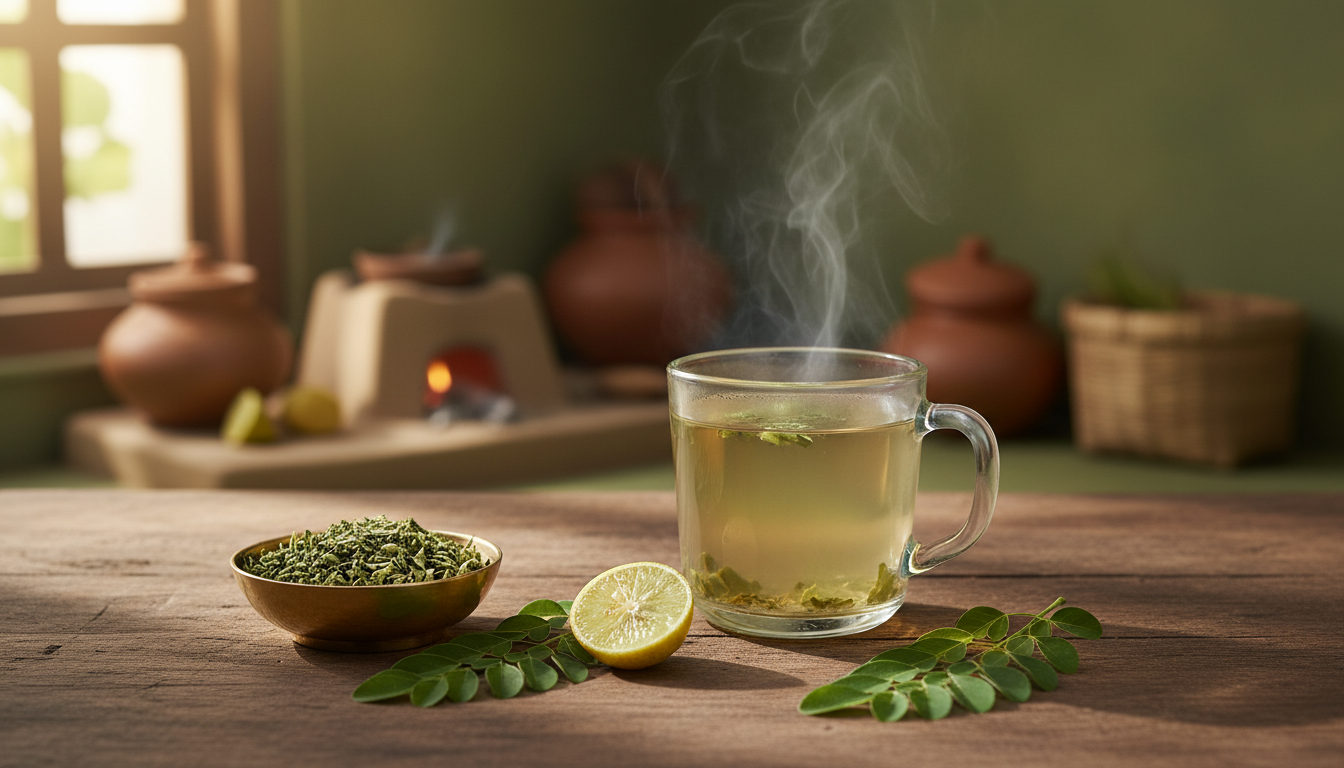
Moringa tea benefits are real but smaller than most websites suggest. A cup of moringa leaf tea is a caffeine free, low calorie drink with plant antioxidants and a small amount of nutrients. The big claims about blood sugar and cholesterol come from studies that used several grams of leaf powder every day, not a cup of tea. So enjoy it as a healthy habit, eat the leaves if you want the nutrition, and talk to your doctor before using moringa for any health condition.
What is moringa tea?
Moringa tea is an infusion made from the dried leaves of Moringa oleifera, the drumstick tree. You may know it as sahjan in Hindi, murungai in Tamil, muringa in Malayalam or munaga in Telugu. It is the same tree that gives us the drumstick pods in sambar.
The leaves are dried and either crushed into flakes or ground into a fine green powder. It tastes grassy, a little like spinach or a mild green tea. It contains no tea leaves, so it is naturally caffeine free.
Moringa tea benefits that hold up
These are the moringa tea benefits you can reasonably expect from a regular cup, based on what the leaf contains and what research supports.
- A caffeine free warm drink. You can drink it at night without losing sleep. It is also an easy swap for a third cup of sweet milky chai.
- Plant antioxidants. Moringa leaves contain polyphenols such as quercetin and chlorogenic acid, which protect cells from damage in lab studies. How much they do in your body from one cup is not well measured.
- Hydration with almost no calories. Plain moringa tea is mostly water, so it counts toward your daily fluids like other herbal teas.
- A small nutrient top up. Some minerals and plant compounds dissolve into the water. The amounts are modest, and no study we found has measured exactly how much ends up in your mug.
Notice what is missing: weight loss, cancer prevention and “detox”. There is no good human evidence for those moringa tea benefits, even though many sites list them.
Why moringa tea is not the same as moringa powder
This is the point most articles skip, and it changes how you should read every claim about moringa tea benefits online.
Most lists of moringa leaves benefits quote nutrition tables for whole leaves. Raw moringa leaves contain about 9 g of protein, 4 mg of iron and 52 mg of vitamin C per 100 g, according to USDA data. Those numbers describe leaves you eat, not water the leaves have soaked in.
When you brew tea and strain it, most of the fibre and protein stays in the leaves you throw away. Some vitamins and minerals move into the water, and heat breaks down part of the vitamin C. So your cup holds only a fraction of what the leaf contains.
The same gap applies to the research. A 2015 review by Stohs and Hartman in Phytotherapy Research looked at the safety and efficacy evidence for Moringa oleifera. It found five human studies, and all five used powdered whole leaf, not tea. They reported lower blood sugar and better cholesterol, but the authors warned that products are not standardised and more trials are needed.
What the blood sugar studies actually used
| Form of moringa | Typical amount in studies | What you swallow |
|---|---|---|
| Leaf powder or capsules | about 2 to 8 g a day, for weeks | the whole leaf |
| Moringa leaf tea | about 1 to 2 g of leaves per cup | only what dissolves in water |
| Cooked drumstick leaves | a handful in dal, sambar or thoran | the whole leaf, as food |
A 2020 systematic review of moringa and blood sugar control in animal and human studies found that human trials were few, small and varied, and mostly used dry leaf powder. A separate 2021 meta-analysis of seven small trials (257 people) found lower fasting blood sugar but no clear change in HbA1c, the three month blood sugar marker.
So when you read “moringa lowers blood sugar”, treat it as a cautious finding about powder at a measured dose. It is not proof that moringa tea benefits your sugar levels in the same way.
Moringa tea benefits vs other forms: which should you choose?
Let your goal decide, not the label on the pack.
| Your goal | Best choice | Why |
|---|---|---|
| A caffeine free evening drink | Moringa tea | Light, warm, no caffeine |
| More iron, protein and fibre | Leaves cooked in food | You eat the whole leaf |
| A studied blood sugar dose | Powder or capsules, only with your doctor | Matches what trials used |
| Fewer sugary drinks | Moringa tea with lemon | Flavour without sugar |
A practical tip for Indian kitchens: if nutrition is your main reason, a plate of murungai keerai poriyal or a handful of drumstick leaves in your dal gives you far more of the leaf than any tea bag. Think of moringa tea benefits as a pleasant extra on top of a good diet.
How to make moringa leaf tea at home
- Bring about 250 ml of water to a boil and let it rest for a minute.
- Add 1 teaspoon of dried moringa leaves, or one tea bag.
- Cover and steep for 4 to 5 minutes to keep the aroma in.
- Strain, then add lemon, a slice of ginger or a few tulsi leaves if you like.
With powder, stir half to one teaspoon into warm water and drink it without straining. You get more of the whole leaf this way, but the taste is stronger and earthier.
The grassy flavour pairs well with citrus. If you enjoy light, fresh cups, try lemongrass tea and how to brew it as well.
Buying tips
- Pick leaves or powder that are bright to deep green. Dull brown powder is old.
- Check that the pack lists only Moringa oleifera leaves, with no added sugar.
- Look for a batch number and an FSSAI licence number on the pack.
- Store it in an airtight jar away from light and heat.
How much moringa tea per day, and when?
There is no official dose. One to two cups a day is a sensible amount for healthy adults, in line with how people use other herbal teas. You do not need more to enjoy the moringa tea benefits listed above.
With no caffeine, any time of day works. If you have a sensitive stomach, drink it with or after food. Plain moringa tea has almost no calories, so many people drink it during an intermittent fast. Fasting for a blood test or a religious fast follows different rules, as our guide on whether herbal tea breaks a fast explains.
Side effects and who should avoid moringa tea
Moringa leaves are generally well tolerated in food amounts, and the 2015 review reported no adverse effects in the human studies it covered. Still, some people should be careful before chasing moringa tea benefits.
- Pregnant women. Avoid moringa supplements and strong preparations. The root, bark and flowers have traditionally been linked to miscarriage risk, and there is too little safety data for concentrated leaf products. Ask your doctor first.
- People on diabetes medicines. Moringa may lower blood sugar a little. With medicines, that could push it too low.
- People on blood pressure medicines. Moringa may lower blood pressure slightly, so the same caution applies.
- People on thyroid medicine (levothyroxine). Some sources flag a possible interaction, mostly from animal and lab work. Ask your doctor before drinking it daily.
- Sensitive stomachs. Large amounts, especially of powder, can cause loose stools, nausea or bloating.
Never make tea from moringa roots or bark, which contain compounds that can be toxic. Use leaves only, from a trusted source.
How moringa compares with other herbal teas
Moringa is one of many caffeine free cups. See how other herbal tea varieties support everyday health, read about herbal tea in India and its traditional uses, or try the 7 leaves herbal tea blend, which mixes several Indian herbs in one cup.
Keep reading on Tea Story
- Chamomile in Tamil and how to make the tea: names, uses and safety
- Twinings lemon and ginger tea benefits: what the ginger in each bag can and cannot do
- Mint Majesty tea and its benefits: a caffeine free spearmint and peppermint blend
- Tulsi green tea benefits: holy basil in your cup
- The healthiest herbal teas: antioxidants and everyday uses
FAQ
What are the main moringa tea benefits?
The main moringa tea benefits are a caffeine free, low calorie drink with plant antioxidants and small amounts of nutrients. The stronger blood sugar claims come from studies using leaf powder, not tea.
Is it good to drink moringa tea every day?
For most healthy adults, one to two cups a day is reasonable. If you are pregnant or take diabetes, blood pressure or thyroid medicines, talk to your doctor first.
Does moringa tea help with weight loss?
There is no good human evidence that it burns fat. It helps only if it replaces sweet tea, juice or soft drinks.
Does moringa tea have caffeine?
No. Moringa leaves contain no caffeine, so the tea suits the evening.
Is moringa powder better than moringa tea?
For nutrition, yes, because you swallow the whole leaf, and powder is what most studies used. That strength is also why powder is more likely to interact with medicines.
Are moringa tea benefits the same for men and women?
Yes, the basic moringa tea benefits apply to everyone. The main difference is safety: women who are pregnant or trying to conceive should avoid moringa supplements and check with a doctor about the tea.
Bottom line
The honest summary of moringa tea benefits: it is a pleasant, caffeine free herbal cup with antioxidants and a little nutrition, not a medicine. The blood sugar and cholesterol research is promising but early, and it used leaf powder in measured doses. Enjoy one or two cups a day, cook the leaves for real nutrition, avoid roots and bark, and talk to your doctor if you are pregnant or take regular medicines.
This article is for general information and is not medical advice.



Leave a Reply