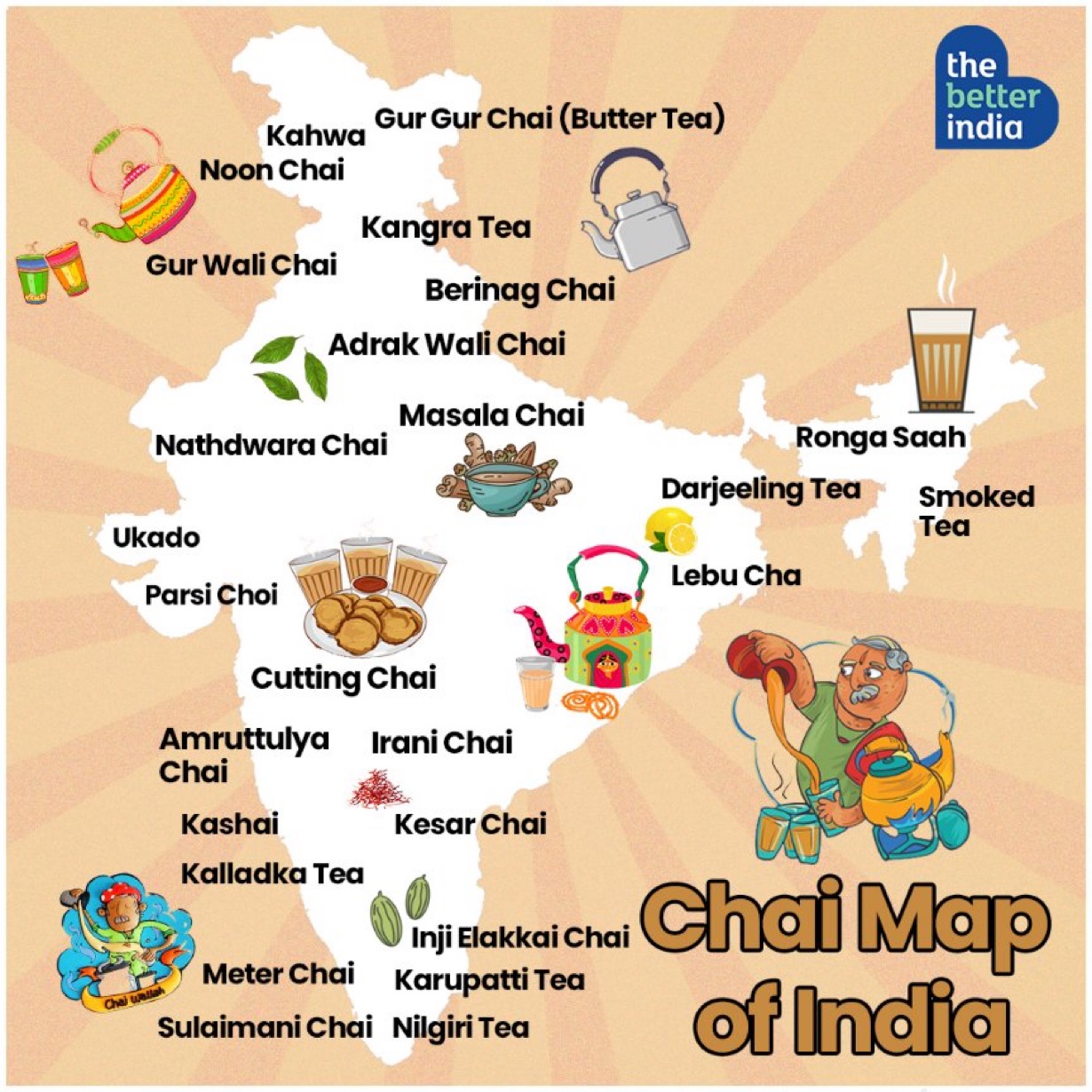
In India, chai isn’t just a drink; it’s a way of life. From busy markets to quiet hill stations, every region has its unique version of this beloved beverage.
Each type of chai tells a story of its region’s culture, tradition, and taste preferences. Whether it’s the bold flavours of Assam or the aromatic blends of Kerala, there’s a chai for everyone.
Gur Gur Chai (Butter Tea)
Originating from the cold terrains of Ladakh, Gur Gur Chai is a robust tea made by churning together tea leaves, salt, and yak butter. It’s a staple among the locals, providing warmth and energy in the harsh mountain climate.
Traditionally served in wooden cups, this tea is quite thick and has a unique, salty taste. It’s an acquired taste but cherished by those accustomed to it. The high-calorie content makes it apt for the extreme weather conditions in Ladakh.
Noon Chai (Pink Tea)
Hailing from the Kashmir Valley, Noon Chai or Pink Tea is a delicacy made from special green tea leaves, milk, salt, and a pinch of baking soda. Its distinctive pink hue and subtle flavors make it a favourite choice during festivities and gatherings.
Traditionally, Noon Chai is served in Samovars and enjoyed with a variety of local breads. The inclusion of baking soda helps develop its signature pink colour. This tea is usually garnished with crushed nuts, adding to its richness and aromatic appeal.
Amruttulya Chai
In Maharashtra, especially in Pune, Amruttulya Chai holds a special place. Served in small glass cups, this strong and milky tea is often accompanied by traditional snacks like vada pav or bhajiya.
The word ‘Amruttulya’ translates to ‘nectar-like’, reflecting the tea’s deliciousness. This blend is made with a generous amount of sugar, milk, and tea leaves, creating a robust and flavoursome drink that’s incredibly satisfying.
Sulaimani Chai
From the southern state of Kerala comes Sulaimani Chai, a black tea infused with spices like ginger, cardamom, and cloves. It’s known for its tangy and refreshing taste, often served after meals as a digestive aid.
This tea is a fine example of Kerala’s rich culinary tradition. The spices used in Sulaimani Chai not only enhance its flavour but also provide various health benefits, making it a popular choice among the locals.
It’s a simple yet potent beverage that leaves a lasting impression on anyone who tries it.
Kesar Chai
Kesar Chai, infused with the richness of saffron, is a luxurious treat enjoyed across India. This aromatic tea is prepared by steeping saffron strands in hot milk along with tea leaves, creating a golden-hued beverage that’s as visually appealing as it is flavourful.
Saffron, being one of the most expensive spices in the world, adds a touch of opulence to this tea. Kesar Chai is often served on special occasions and is noted for its health benefits, including improved mood and enhanced vitality.
Kashai
From Mangalore, Kashai is an herbal tea or kadha that helps boost the immune system and soothe the senses. It’s flavored with cumin, peppercorns, coriander, dry ginger, cardamom, nutmeg powders, mulethi, and jaggery.
This tea is particularly popular during winters for its warmth and therapeutic properties. Each spice used in Kashai contributes to its health benefits and distinctive taste.
It’s a perfect drink to keep the winter chills at bay.
Lebu Cha (Lemon Tea)
Known popularly in Kolkata, Lebu Cha or Lemon Tea is a zesty twist to the classic chai. It’s prepared by adding freshly squeezed lemon juice to black tea, creating a refreshing and rejuvenating drink perfect for hot summer days.
Street vendors serve this tea with a dash of rock salt and black pepper, enhancing its taste. Lebu Cha is more than just a drink; it’s a cultural experience representing the vibrant street life of Kolkata.
Ronga Saah
Ronga Saah is a unique tea variety from Assam, known for its vibrant red colour and strong flavour. It’s made by brewing black tea leaves with a special variety of wild ginger, giving it a distinct taste that’s both spicy and invigorating.
This tea highlights Assam’s rich tea heritage and is enjoyed by locals as well as travellers. Ronga Saah is often consumed without milk and sugar, allowing the natural flavours to shine through.
It’s a bold and robust flavour that’s not easily forgotten.
Ukado
Originating from Gujarat, Ukado is a traditional herbal tea prepared with a blend of spices like turmeric, ginger, cloves, and black pepper. It’s revered for its immune-boosting properties and is often consumed during cold and flu season.
This tea’s healing properties are well-known in Gujarat, where it is made in households during the winters. Ukado can be customised with various spices depending on personal preference, making it a versatile and beneficial drink.
Ukado stands out for its strong medicinal value and comforting taste.
Parsi Tea
Parsi Tea is a cultural amalgamation of Iranian and Indian influences, commonly found in Parsi households. It’s a sweet and milky tea infused with cardamom, often served with buttery biscuits or rusks.
This tea reflects the unique culinary traditions of the Parsi community. The addition of cardamom gives it a delightful aroma and taste, making it a comforting drink for any time of the day.
Nathdwara Chai
From the temple town of Nathdwara in Rajasthan comes Nathdwara Chai, a fragrant blend of black tea, milk, and aromatic spices like cloves and cinnamon. It’s a popular beverage among devotees visiting the famous Shrinathji Temple.
This chai is deeply rooted in the religious and cultural traditions of Nathdwara. The spices used in this tea not only add to its flavour but also have a warming effect, making it a favoured drink during colder months.
In India, the diverse varieties of chai are more than just drinks; they encapsulate regional traditions and flavours. Each cup offers a unique sensory experience that reflects the essence of its place of origin.
From the robust Gur Gur Chai of Ladakh to the aromatic Kesar Chai enjoyed across the nation, these teas bind communities through shared rituals and tastes. Exploring these types of chai opens a window into the rich cultural tapestry of India.
Source: Ashitaagrawal

Leave a Reply