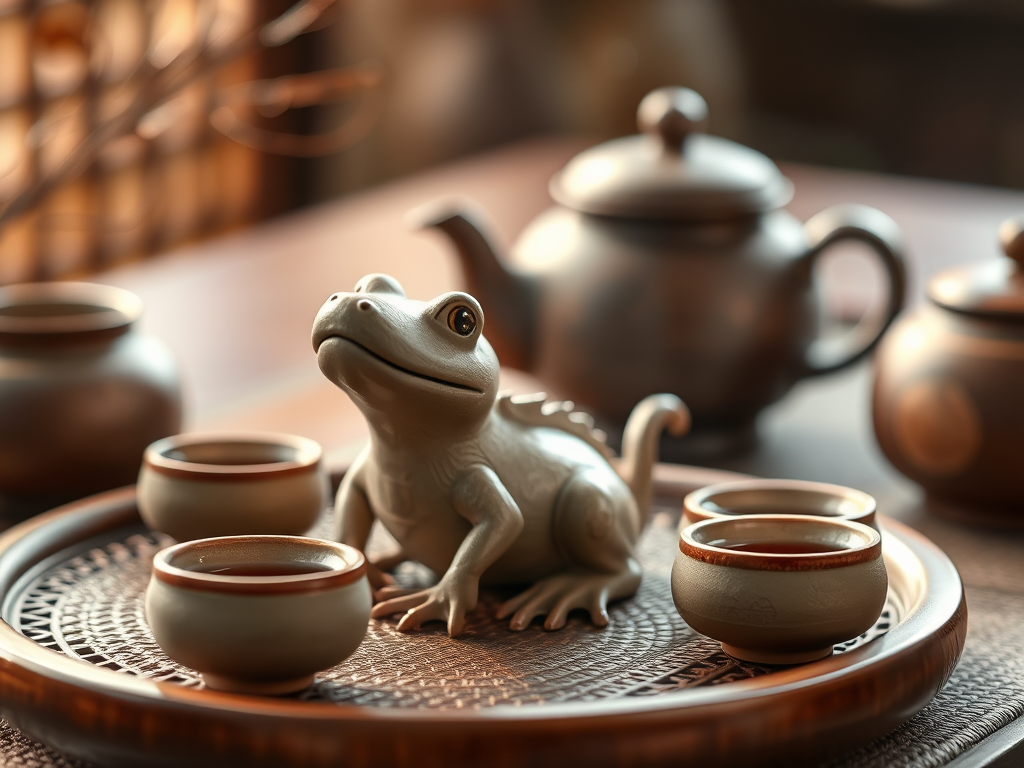
Tea has always been more than just a drink—it’s a ritual, an art form, and for many, a deeply personal experience. In Chinese tea culture, especially during Gongfu tea ceremonies, the experience is often enriched by the presence of a small, seemingly mysterious figure placed on the tea tray: the tea pet.
You may have seen one before—perhaps a tiny clay frog, a wise dragon, or even a mini Buddha—quietly sitting on the tea table, being “fed” with tea during the ceremony. But what exactly is a tea pet? Is it just decoration, or is there more to its story?
In this article, we’ll dive into the origins, symbolism, types, and care of tea pets, helping you understand why this charming companion holds a treasured spot in the hearts of tea lovers around the world.
What is a Tea Pet?
A tea pet is a small figurine made of Yixing clay or other types of unglazed clay, often placed on the tea tray during traditional Chinese tea ceremonies. During the tea session, leftover tea or rinse water is poured over the tea pet. Over time, the clay absorbs the tea and develops a natural patina—a shine that reflects years of shared tea moments.
But tea pets are more than just cute mascots. They’re symbols of good luck, wisdom, and companionship. They represent the patience and artistry of the tea drinker and offer a whimsical, interactive way to enhance the tea experience.
A Brief History of Tea Pets
Tea pets originated from Yixing, China, the same region famous for its handcrafted Yixing teapots. Dating back to the Ming Dynasty, tea pets were sculpted by artisans using leftover clay from teapot production. Since this Zisha clay is highly porous and prized for its ability to enhance the flavor of tea over time, it made perfect sense to extend that same material into decorative figures for the tea tray.
Historically, tea pets were believed to absorb spiritual energy and were often shaped into figures with symbolic meaning—animals for prosperity, monks for wisdom, mythical creatures for protection.
As Gongfu tea brewing became popular in Taiwan and the West, tea pets found new audiences who appreciate the slow, meditative aspects of tea culture—and the personality that a tea pet brings to the table.
How Are Tea Pets Used?
Using a tea pet is simple, and part of the fun lies in its interaction with the tea ritual.
Here’s how it works:
- Place the tea pet on your tea tray.
- During your tea session, when rinsing tea leaves or discarding excess tea (especially the first brew or rinse), pour it over the tea pet.
- Over time, the unglazed clay absorbs the tea, changing color and gaining a polished, lived-in look.
- Many tea lovers “adopt” a tea pet, using it in every session—watching it age gracefully alongside their tea practice.
Some tea pets are purely decorative. Others have interactive features, like:
- Pee-pee boys: These tiny boy-shaped figures “pee” hot water when heated and doused, entertaining guests and acting as temperature indicators.
- Color-changing pets: Modern versions made from special materials change color when hot water is poured on them.
Why Tea Lovers Adore Their Tea Pets
Tea pets aren’t essential to brewing tea—but they often become a beloved part of a tea lover’s ritual. Here’s why:
1. They Make Tea Time More Personal
Like a desk plant or a coffee mug you love, a tea pet adds a personal touch to your tea table. It can reflect your style, your values, or your humor.
2. They Symbolize Good Luck
Different shapes hold different meanings. A dragon for strength. A toad for wealth. A Buddha for peace. Choosing a tea pet is like choosing a quiet reminder of your hopes.
3. They Tell a Story Over Time
As you pour tea over your tea pet, it changes—gaining a deep sheen and sometimes darkening. This patina is like a tea drinker’s diary, documenting the cups shared and the years passed.
4. They Create Connection
If you brew tea for guests, your tea pet often becomes a conversation starter. It’s a simple way to introduce others to Gongfu tea culture, and maybe even pass on the tradition.
Popular Types of Tea Pets and Their Meanings
| Tea Pet | Symbolism |
| Dragon | Power, protection, and prosperity |
| Toad (Three-legged) | Wealth and abundance, often used in feng shui |
| Buddha or Monk | Inner peace, enlightenment, and calm |
| Pig | Joy, fertility, and prosperity |
| Pee-pee Boy | Playfulness; also used as a water temperature indicator |
| Elephant | Strength, wisdom, and memory |
| Cat (Maneki-neko style) | Luck and protection from misfortune |
Each figure brings a unique character to your tea tray. Some tea drinkers even build a “tea zoo” of pets, each serving a role or memory.
How to Care for a Tea Pet
Tea pets are low maintenance, but like a good teapot, they thrive with a little care.
🫖 Dos:
- Rinse your tea pet with warm water after use.
- Use soft tea towels to gently dry it.
- Let it air-dry completely before storing.
- Be consistent—pour the same type of tea (black, oolong, pu-erh) to help develop a consistent patina.
❌ Don’ts:
- Avoid soap or detergent—this can clog the porous clay.
- Don’t use boiling water unless it’s meant for that (like pee-pee boys).
- Don’t store in sealed containers while damp—mold can form.
The more you use your tea pet, the more beautiful it becomes. In time, it becomes not just a decoration but a reflection of your tea journey.
Can You Make Your Own Tea Pet?
Yes! Skilled potters or hobbyists sometimes sculpt their own tea pets from Yixing or other porous clays. Just remember:
- The clay should be unglazed to allow tea absorption.
- Keep it small enough for the tray.
- Let your creativity flow—your tea pet can be as serious or silly as you like.
Some tea lovers create custom tea pets to commemorate milestones or to gift to fellow tea drinkers. It adds meaning when the pet is handmade.
Where to Buy a Tea Pet
Tea pets are available online and in specialty tea shops. Here are some popular sources:
- Etsy – Handmade tea pets from artists around the world.
- Yunnan Sourcing – Offers a wide range of traditional and quirky designs.
- Teaware.house / Verdant Tea / Mei Leaf – Often feature artisan-crafted pets.
When choosing one, consider both symbolism and material. Yixing clay is the most traditional, but newer materials like heat-reactive ceramic are fun too.
FAQ: Tea Pets
What exactly is a tea pet used for?
Tea pets are used during tea ceremonies to symbolically absorb tea, bring good luck, and personalize the tea tray. They’re “fed” with leftover tea, and over time, they develop a beautiful patina.
Can I use any figurine as a tea pet?
Technically, yes—but traditional tea pets are made of unglazed clay (usually Yixing) which can absorb tea. Glazed or plastic figures won’t change with use or develop the same texture.
Why is it called a tea pet?
The name reflects the companionship tea lovers develop with these little figures. Like a pet, you care for them regularly, and over time, they “grow” with you—changing color, aging gracefully.
What is a pee-pee boy tea pet?
This cheeky tea pet is a hollow clay figure that “pees” when hot water is poured on it. It’s used for fun, and also to test if water is hot enough. The hotter the water, the stronger the stream!
Do tea pets have spiritual meaning?
Yes. Many tea pets are modeled after symbols in Chinese folklore or Buddhism. They’re often seen as guardians, bringers of luck, or simply reminders of tea wisdom like patience and calm.
How long does it take for a tea pet to develop a patina?
It depends on how often you use it and what tea you use. Some tea pets show a sheen after a few months of daily use, while others may take years to show rich color. It’s part of the slow magic of tea.
Can I use my tea pet with herbal tea?
Yes, though herbal teas don’t contain tannins, which help develop patina. Black, oolong, and pu-erh teas tend to “season” tea pets faster.
What do I do with my tea pet when not using it?
Keep it clean and dry. You can leave it on your tea tray as a decoration or store it in a breathable container. Many tea lovers keep their tea pets out in the open, as part of their living decor.
Final Sip
A tea pet might seem like a small thing—but like many aspects of tea culture, its beauty lies in its quiet presence. It doesn’t talk, it doesn’t move, but it grows with you, session by session, drop by drop.
In a world that often rushes past rituals, a tea pet invites you to slow down. To pour a little extra tea. To share a moment with something that never asks for attention, but always adds meaning.
Whether you’re steeping a strong pu-erh or a floral oolong, consider inviting a tea pet to your table. Over time, they’ll become more than a figure—they’ll become a memo

Leave a Reply